Podcast lesson · A1

Où sont les clés ?

Where are the keys?

Où sont les clés ?
0:006:48

Chapters

Introduction

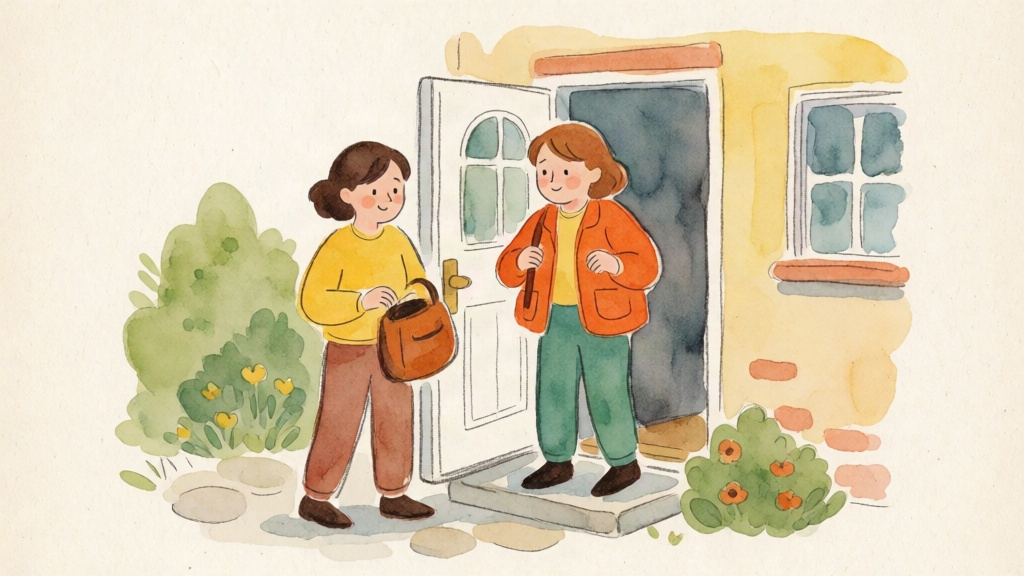
Welcome to our French learning podcast. Today, we join Marie right outside her cozy home on a quiet afternoon. She is returning from a quick walk, but as she reaches for her front door, something goes wrong. She cannot find what she needs to get inside. In this episode, we will focus on talking about completed actions in the past using the passé composé with the auxiliary verb avoir and regular past participles ending in acute e, like cherché or regardé. This is one of the most useful patterns in French when you want to describe what you did earlier today. As you listen to the story, pay close attention to two important vocabulary words: la clé, which means the key, and sous, which means under. Listen carefully to how Marie retraces her steps and looks everywhere to solve her little problem. Let us dive straight into Marie's story in neutral, clear French.

After listening

How was “Où sont les clés ?”?

Tell us how comfortable this felt to calibrate your vocabulary review.

Full lesson transcript

Read the complete lesson, including the French dialogue and English explanations.

Part 1

Welcome to our French learning podcast. Today, we join Marie right outside her cozy home on a quiet afternoon. She is returning from a quick walk, but as she reaches for her front door, something goes wrong. She cannot find what she needs to get inside. In this episode, we will focus on talking about completed actions in the past using the passé composé with the auxiliary verb avoir and regular past participles ending in acute e, like cherché or regardé. This is one of the most useful patterns in French when you want to describe what you did earlier today. As you listen to the story, pay close attention to two important vocabulary words: la clé, which means the key, and sous, which means under. Listen carefully to how Marie retraces her steps and looks everywhere to solve her little problem. Let us dive straight into Marie's story in neutral, clear French.

Part 2

Marie arrive devant la maison. Le soleil brille, mais Marie est pressée d'entrer. Elle s'arrête devant la grande porte. Marie a cherché la clé dans son manteau. Elle a touché une poche, puis elle a touché une autre poche. Mais la clé n'est pas dans la poche. Marie a regardé son sac. Elle a ouvert le sac avec calme. Marie a cherché partout dans le sac. Elle a regardé à gauche et à droite. Elle n'a pas vu la clé. Marie soupire et reste devant la porte. Elle pense à sa journée. Où est la clé de la maison ? Marie a marché dans la rue, mais elle a gardé son sac fermé. Elle a vérifié chaque petit coin du sac encore une fois. Rien du tout. Marie se demande : est-ce que la clé est tombée par terre ? Marie a regardé le sol près de la porte. Le sol est propre et vide. La porte reste fermée. Marie a fermé les yeux pour réfléchir un moment. Elle doit absolument retrouver cette clé pour entrer dans la maison.

Part 3

Heureusement, une fenêtre de la maison est ouverte. Marie réussit à entrer dans la maison par le côté. Maintenant, elle est à l'intérieur, mais elle veut comprendre où est sa clé. Marie a regardé dans le salon. Elle voit la grande table au milieu de la pièce. Marie a cherché ses clés près de la table. Elle a regardé sur la table. Sur la table, il y a un livre et une tasse, mais pas de clé. Ensuite, Marie a regardé sous la table. Sous la table, il n'y a rien du tout. Marie a continué sa recherche avec attention. Elle a marché vers le couloir. Marie a regardé près de la porte d'entrée. Elle a vérifié le meuble en bois. Elle a touché le haut du meuble. Pas de clé ici non plus. Marie commence à s'inquiéter un peu. Elle a cherché dans chaque pièce du bas. Elle a inspecté chaque endroit possible. Marie a pensé : j'ai utilisé cette clé ce matin avant de sortir. Alors, où est la clé maintenant ?

Part 4

Marie s'assoit une minute pour bien réfléchir. Elle se rappelle son départ ce matin. Ce matin, elle a posé des affaires avant de sortir. Marie se lève et retourne dans le salon. Elle a regardé la table une nouvelle fois avec beaucoup de calme. Près de la table, il y a un vieux sac de sport par terre. Marie a regardé sous le sac. Soudain, un bruit métallique retentit quand elle bouge le tissu. Marie a crié de joie. Elle a trouvé la clé ! La petite clé dorée était cachée juste sous le sac, tout près de la table. Marie a ramassé la clé avec un grand sourire. Elle a touché le métal froid dans sa main. Ce matin, Marie a laissé la clé glisser sous le sac sans faire attention. Maintenant, tout est en ordre dans la maison. Marie a rangé la clé dans sa poche préférée pour ne plus la perdre. Elle est contente d'avoir enfin résolu ce mystère toute seule.
Part 5

And that brings us to the end of Marie's little search. She finally found her keys right under the bag near the table. Now, let us break down the grammar rule we practiced throughout the story: the passé composé with the auxiliary verb avoir for regular verbs that end in e-r. When you want to describe a completed action in the past, French uses two building blocks: the present tense of the verb avoir, followed by the past participle of your action verb. For regular e-r verbs, forming the past participle is simple. You remove the e-r ending and replace it with an e with an acute accent, pronounced like a clean ay sound. For example, the infinitive chercher, meaning to look for, becomes cherché. In our story, we heard this exact line: Marie a cherché ses clés. Here, you hear a, which is the third-person present form of avoir, paired with the past participle cherché, meaning Marie looked for her keys. We also heard: Elle a regardé sous la table. In this sentence, the verb regarder becomes regardé. Together with a, it creates the completed past action: she looked under the table. Later on, when Marie finally succeeds, the story says: Elle a trouvé la clé. Here, trouver becomes trouvé, telling us that she found the key. Notice how this pattern remains identical across these regular verbs: you simply take the correct form of avoir and add the acute e participle. Here is your actionable tip for today: whenever you misplace an item or complete a task at home, say one short sentence in French to describe what you just did. For instance, after checking your desk, say out loud: j'ai cherché mon téléphone, or after spotting your keys, say: j'ai trouvé mes clés. Saying these short sentences throughout your day builds muscle memory and helps past actions roll off your tongue naturally. Keep practicing, stay curious, and join us again next time for another everyday story in French. Until then, take care and happy learning.

Get personalized lessons in French

In Fabling, each podcast is uniquely generated from the vocabulary and grammar rules you’re currently practicing.

Try a free story

Your first personalized story is free. No card needed.