Podcast lesson · A1

Ana busca las llaves

Ana looks for the keys

Ana busca las llaves
0:005:59

Chapters

Introduction

Welcome back to our Spanish learning podcast. Today, we visit Ana in her lovely house. Ana has an appointment and needs to go outside, but there is a small problem: she cannot find her keys anywhere. As she moves around her house looking for them, we will focus on an essential grammar pattern in Spanish: regular verbs that end in -a-r in the present tense. Pay special attention to how these verb endings change. When someone talks about themselves with yo, the verb ends in the letter o. When we talk about Ana doing an action, the verb ends in the letter a. Listen carefully for key vocabulary words like buscar, which means to look for or to search, and la llave, which means the key. You will also hear the word debajo, which means underneath. Relax, listen closely to Ana's search, and enjoy this simple story completely in Spanish.

After listening

How was “Ana busca las llaves”?

Tell us how comfortable this felt to calibrate your vocabulary review.

Full lesson transcript

Read the complete lesson, including the Spanish dialogue and English explanations.

Part 1

Welcome back to our Spanish learning podcast. Today, we visit Ana in her lovely house. Ana has an appointment and needs to go outside, but there is a small problem: she cannot find her keys anywhere. As she moves around her house looking for them, we will focus on an essential grammar pattern in Spanish: regular verbs that end in -a-r in the present tense. Pay special attention to how these verb endings change. When someone talks about themselves with yo, the verb ends in the letter o. When we talk about Ana doing an action, the verb ends in the letter a. Listen carefully for key vocabulary words like buscar, which means to look for or to search, and la llave, which means the key. You will also hear the word debajo, which means underneath. Relax, listen closely to Ana's search, and enjoy this simple story completely in Spanish.

Part 2

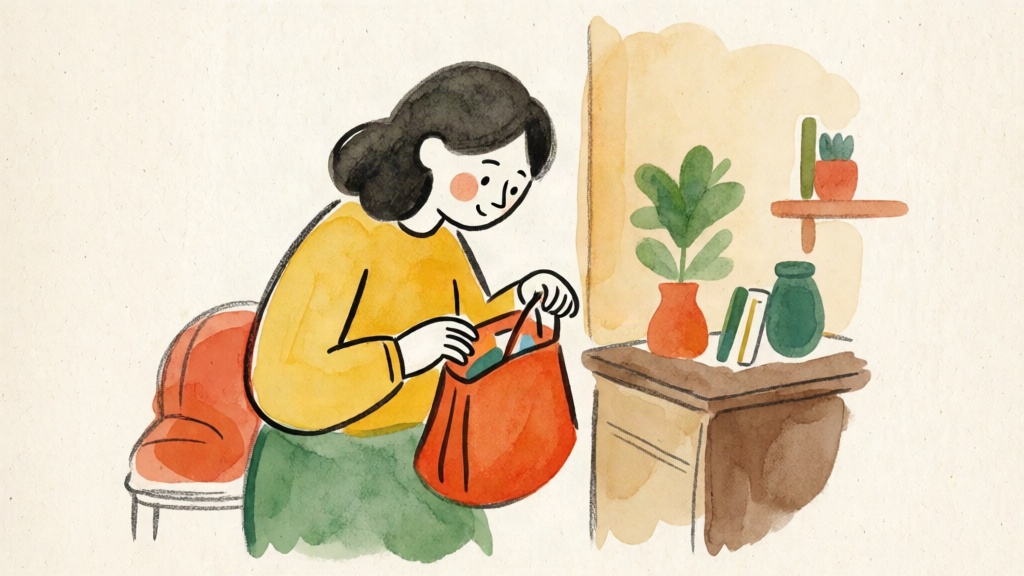
Ana está en la casa. Ella necesita salir ahora. Ana camina hacia la puerta de la casa. Pero Ana no tiene la llave. Ana busca la llave. Ana mira su bolso grande. Ella abre el bolso despacio. En el bolso, Ana busca y busca con la mano. Ella dice: Yo no veo la llave en el bolso. Yo busco con cuidado, pero no encuentro nada. Ana mira el bolsillo de su abrigo. Ella toca el bolsillo derecho. Ella toca el bolsillo izquierdo. No hay nada en el bolsillo. Ana suspira y camina por la casa. Ella piensa: ¿Dónde está la llave de la puerta? Yo necesito salir pronto. Ana camina otra vez hacia la sala. Ella mira todo con mucha atención. La llave no está en el bolso y no está en el bolsillo. Ana busca en cada rincón de la casa.

Part 3

Ana está en la sala de la casa. En la sala hay una mesa pequeña. Ana camina hacia la mesa. Ella mira la mesa con calma. Encima de la mesa no hay nada. Entonces, Ana mira debajo de la mesa. Ella busca debajo con paciencia. Ana dice: Yo miro debajo de la mesa porque la llave puede caer aquí. Pero ella no ve la llave debajo de la mesa. Ana piensa en su día. Ella intenta recordar: ¿Dónde dejo la llave siempre cuando entro a la casa? Yo entro por la puerta principal. Yo camino a la sala. Yo dejo las cosas en algún lugar. Ana camina en círculos por la sala. Ella busca otra vez cerca de la mesa. Ella mira debajo de otra silla. La casa está en silencio y Ana sigue con su búsqueda con calma.

Part 4

Ana camina de regreso hacia la entrada. Ella mira fijamente la puerta principal. De repente, Ana ve algo brillante. La llave está en un gancho pequeño cerca de la puerta. Ana sonríe alegremente. Ella dice en voz alta: ¡Por fin encuentro la llave! Yo miro la puerta y veo la llave aquí. Ana toma la llave con la mano. Ella guarda la llave con cuidado en su bolso. Ahora Ana está lista para salir de la casa. Ella camina hacia la puerta con una gran sonrisa. Ana abre la puerta despacio y mira la calle hermosa. Ella sale de la casa muy contenta. Todo está en orden y su día continúa sin problemas. Ana cierra la puerta con la llave y camina tranquilamente.
Part 5

Welcome back! Ana found her keys, and now she is on her way. Let us take a moment to break down today's grammar micro-rule. In Spanish, many verbs end in -a-r in their infinitive form, such as buscar, which means to look for, or caminar, which means to walk. When you conjugate regular -a-r verbs in the present tense, the ending tells you who is performing the action right now. When you speak about yourself using yo, the verb takes an -o ending. When you describe what someone else is doing, like Ana, he, or she, the verb takes an -a ending. For example, in the story, Ana describes her own actions by saying: Yo busco con cuidado, which means, I search carefully. Notice that -o ending in busco. Later, when the narrator describes Ana, we heard: Ana camina hacia la mesa, meaning, Ana walks toward the table. Notice the -a ending in camina. We also heard: Ella mira debajo de la mesa, which translates to, She looks underneath the table. In that sentence, mira ends in -a because Ana is the one looking. A great actionable tip for you today is to narrate your own daily routine out loud using these simple endings. As you move around your room, say what you are doing in the present tense. For instance, if you are looking for your phone or your bag, say to yourself: Yo busco mi teléfono, or Yo camino a la puerta. Connecting these physical actions with spoken Spanish helps lock the grammar patterns directly into your memory without needing to translate in your head. Thank you for listening today and practicing your Spanish with us. Keep listening, keep speaking, and see you next time!

Get personalized lessons in Spanish

In Fabling, each podcast is uniquely generated from the vocabulary and grammar rules you’re currently practicing.

Try a free story

Your first personalized story is free. No card needed.